
Futurology’s experience in fast-developing markets has demonstrated that integrating agricultural drones as standalone solutions limits their full potential. Reproducible, long-term results are delivered by an operational system — built on standardized application procedures, trained technical operators, service infrastructure, local availability of spare parts, and controlled uptime metrics.
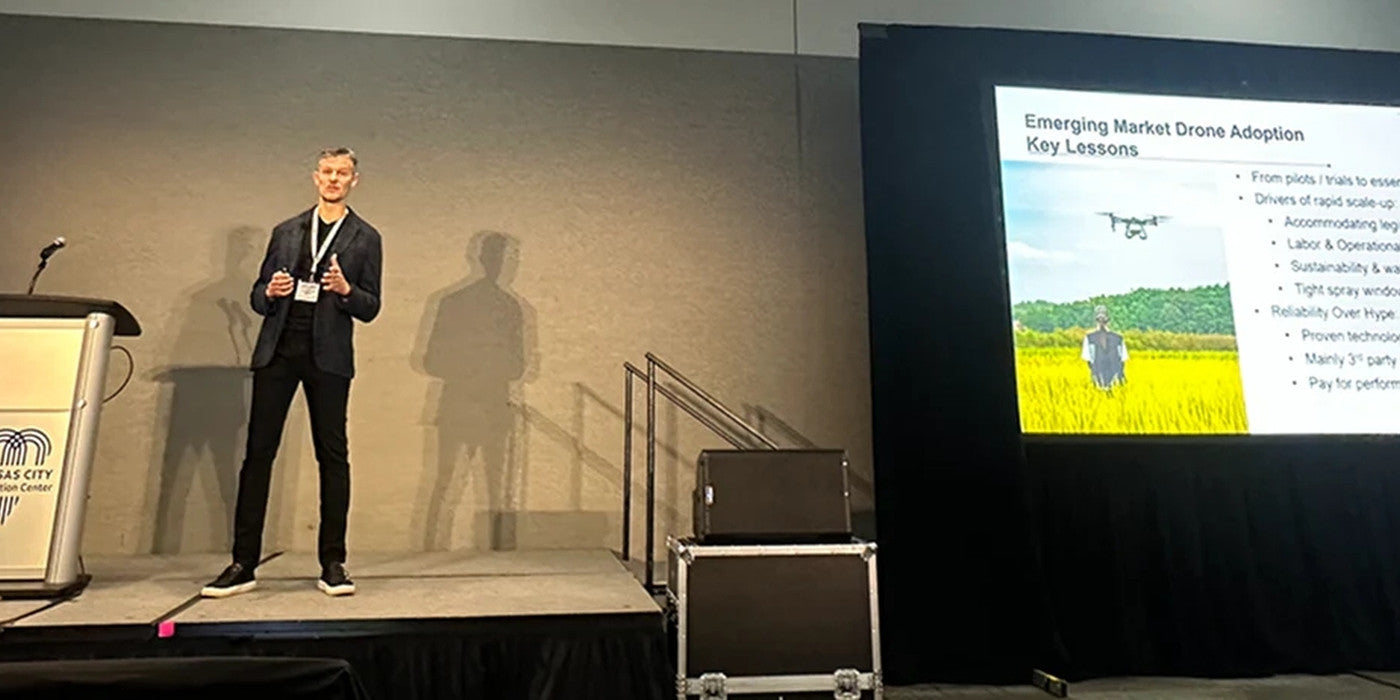
From January 25–29, 2026, the Spray Drone End User Conference 2026 took place in Kansas City — one of the key events dedicated to the commercial use of agricultural drones in the United States. During the conference, the Futurology — XAG Agrifuture team presented its proprietary operational scaling model, developed over 11 years of experience in markets characterized by high operational pressure.


This expertise formed the basis of the presentation, “From Rapid Adoption to Reliable Operations: What Emerging Market Experience Means for the U.S.” Vladimir Haplik, Head of the Agrifuture XAG agricultural division within Futurology, introduced a practical operational scaling model built over more than a decade.
The Futurology model is based on the principle that scaling is not about increasing the number of drones in the field, but about the ability to guarantee stable results during peak seasonal periods. To achieve this, technology integration must be accompanied by the development of a comprehensive operational infrastructure.
In practical terms, the model includes:
- transitioning from pilot projects and trial applications to essential production tools only when a developed service infrastructure capable of ensuring uninterrupted fleet operations is in place;
- building scale through trained third-party service providers who act as operational partners, rather than relying solely on individual farmer-users;
- establishing uptime metrics as a core production parameter that determines trust in the technology during peak periods;
- integrating after-sales support into the overall production model with clearly defined accountability;
- professionalizing the operator’s role as a fleet technical specialist responsible for diagnostics, service, calibration, and work planning.


Labor shortages, compressed agronomic windows, and economic constraints became a real stress test for the effectiveness of this model. Under such conditions, it was confirmed that technology without operational discipline remains an experimental tool. Only through the establishment of a structured system — with regulations, service infrastructure, and trained teams — do agricultural drones transition into the category of stable production assets.
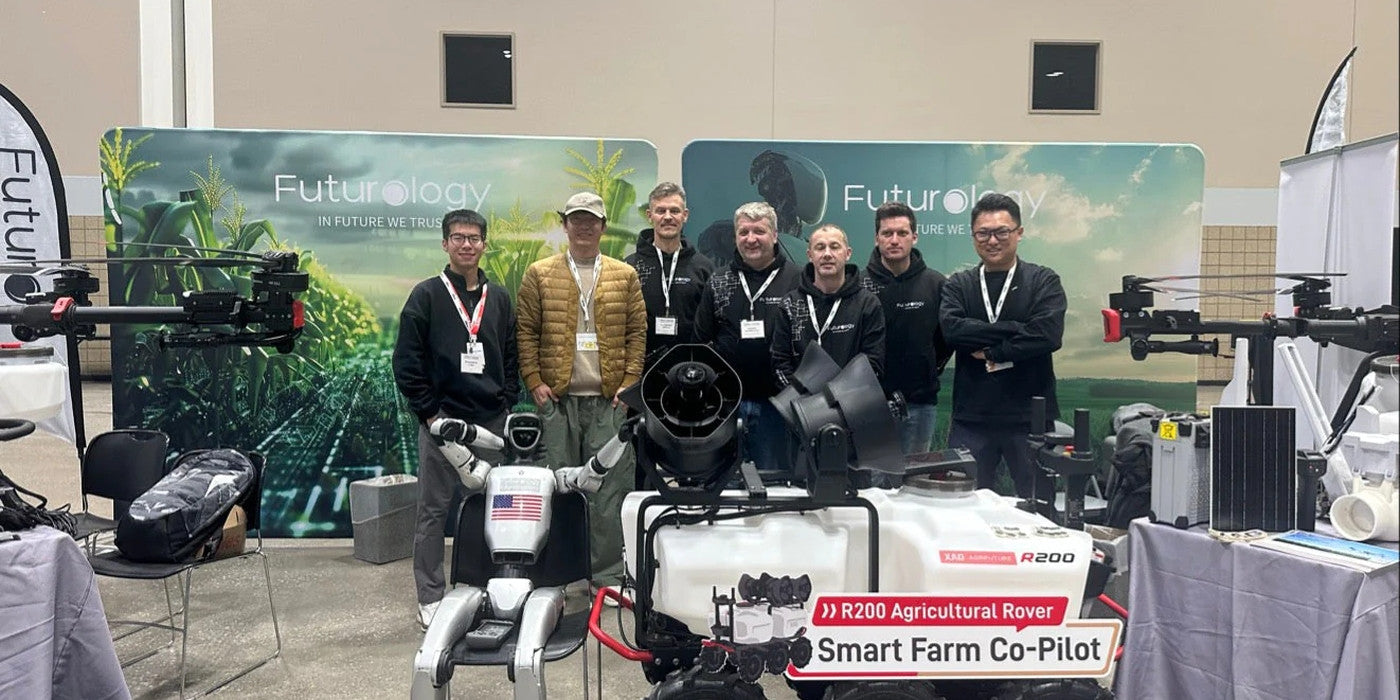
The model presented at the conference is already being implemented in the United States through the Agrifuture XAG division. The division serves as Futurology’s operational platform for infrastructure development: a service network is being deployed, operating procedures are being standardized, technical teams are being trained, and dealer accountability for seasonal fleet readiness is being formalized with measurable performance indicators.


A key element of Futurology’s expertise is the development of the professional role of the agricultural drone operator. In mature markets, the operator is not a “pilot,” but a fleet technical specialist responsible for diagnostics, service, calibration, work planning, and operational continuity.
To support this approach, the first authorized training center in the United States — XAG Academy — has been opened. During the initial four-day dealer program, more than 15 technical specialists were certified. The company became the first partner in North America entrusted by the XAG brand with delivering full-scale training at this level.
As early as this year, 15 trained specialists will support the operation of 150 agricultural drones, with potential coverage of up to 1.5 million acres annually.


The experience presented at the Spray Drone End User Conference 2026 reflects the market’s transition from rapid technology adoption to systemic operation. In the U.S. context, this signals the formation of a new operational standard — where farmers evaluate agricultural drones not by their innovativeness, but by guaranteed seasonal performance.



Leave a comment
This site is protected by hCaptcha and the hCaptcha Privacy Policy and Terms of Service apply.